The Cost Curve: What Each Hour of Delay Adds
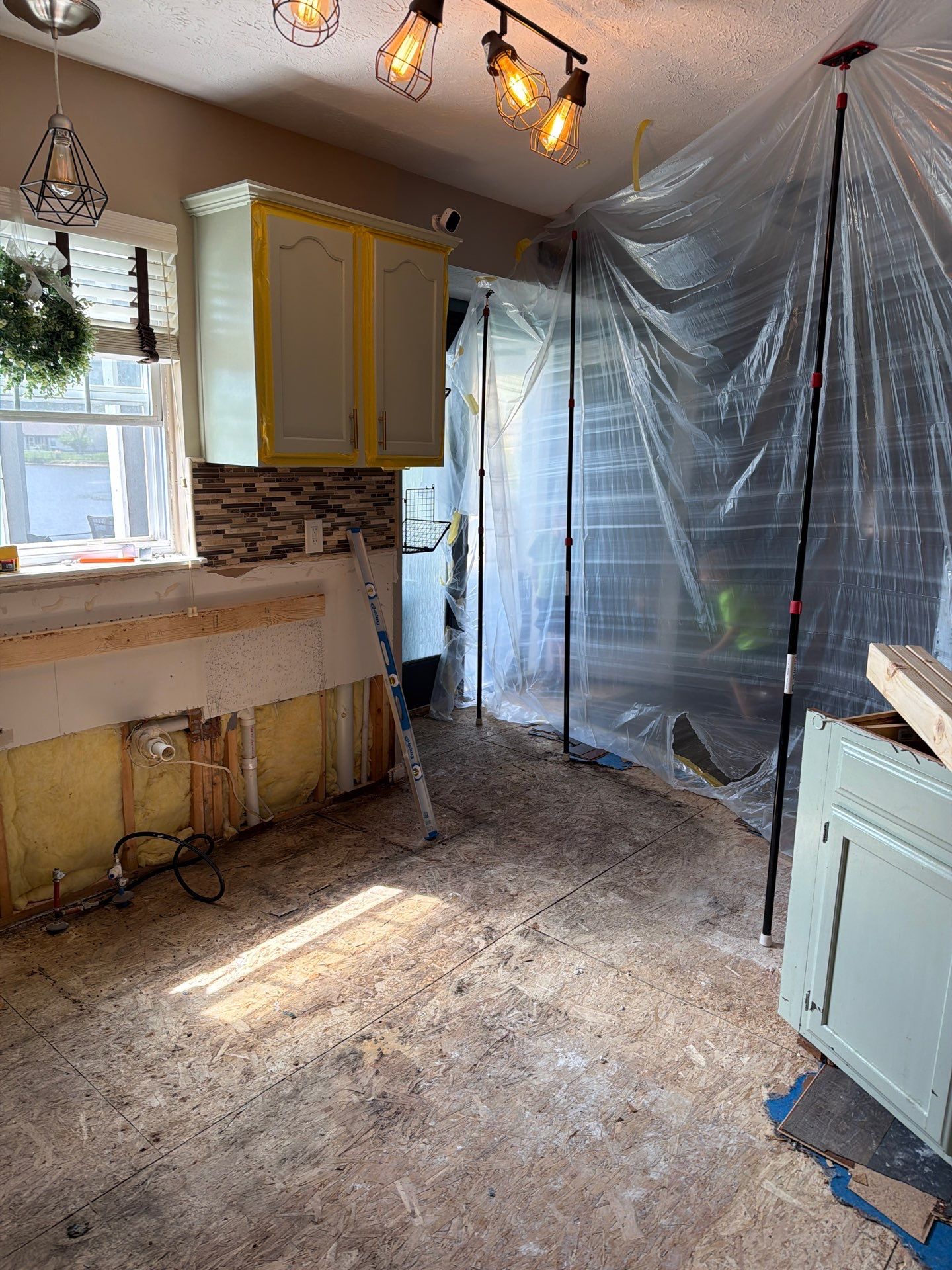
Dishwasher flood restoration follows a steep cost curve tied directly to response time. A leak contained and extracted within the first 60 minutes typically resolves for $800 to $2,200, covering extraction, antimicrobial application, and 3 to 4 days of structural drying with air movers and one or two LGR dehumidifiers. Push that response window to 6 hours, and the average climbs to $2,800 to $5,000 because water has wicked into the toe kick, the subfloor edge, and the lower 6 to 12 inches of adjacent drywall. By the 24 hour mark, cabinet base replacement enters the scope, and totals routinely land between $4,500 and $9,000. Past 48 hours, mold colonization becomes probable under the 70 to 90 degree Fahrenheit, high humidity conditions typical of an enclosed cabinet, and the project shifts from drying to mold remediation after water damage, adding $1,500 to $4,000 depending on square footage affected.
The hidden multiplier in Monrovia kitchens is the substrate. Solid hardwood absorbs water at roughly 5% to 8% moisture content gain per hour of standing exposure, and cupping starts at moisture levels above 16%. Engineered hardwood delaminates faster, sometimes within 12 hours. Tile on a cement board underlayment resists damage well, but tile over plywood subfloor allows water to channel under the grout lines, soaking the substrate while the surface looks dry. Roughly 60% of the dishwasher jobs we inspect involve hidden subfloor saturation that only shows on a moisture meter or thermal imaging scan.
Where the Water Actually Goes
Dishwasher water rarely spreads in a clean circle. The unit sits in a cabinet bay that vents downward, so 70% to 80% of the volume drops below the floor line before it ever shows in front of the appliance. From there, gravity and capillary action take over. In a slab on grade Monrovia home, water tracks along the slab seam and into the bottom plate of adjacent walls. In a home over a basement or crawlspace, water finds the nearest joist bay and drips, sometimes 8 to 15 feet from the dishwasher itself. We document this routinely during inspections, and it explains why a small visible puddle can produce a four room drying scope.
The migration pattern also explains the timing of secondary damage calls. Roughly 35% of homeowners who clean up a visible puddle without professional drying contact us 5 to 10 days later, when the drywall paper begins to bubble, the baseboard discolors, or a musty odor settles into the kitchen. By that point, the gypsum core has been holding 28% to 40% moisture content for over a week, and demolition of the lower 24 inches of drywall is almost always required. The math is unforgiving: a $1,400 dry out on day one becomes a $5,800 partial reconstruction on day ten.
First Response: The Numbers That Matter in the First Hour
Shutting off water at the dishwasher supply valve under the sink stops the source in 5 to 10 seconds if the valve turns freely. About 30% of the valves we encounter in Monrovia homes are seized from disuse, which is why the main shutoff matters as a backup. Pulling the dishwasher forward 4 to 6 inches and placing towels behind it captures the trailing water that would otherwise soak the wall plate. Lifting the kick plate at the base of adjacent cabinets within the first 15 minutes lets air reach the cavity where roughly 40% of trapped water sits. These steps cost nothing and can pull your job from the 6 hour cost bracket back to the under-1 hour bracket, the single largest variable in your final invoice. For a broader look at appliance related losses, our breakdown of kitchen water damage from sink and appliance leaks covers the patterns we see most often.
Calling Monrovia Water Restoration during this same first hour pays off in two ways. Our crews dispatch within 2 hours in most cases, which keeps the drying clock moving while you handle towels and shutoffs. We also bring truck mounted extractors that pull 10 to 20 times the water volume of a wet vacuum in the same window, and that single difference often determines whether engineered flooring is saved or replaced. Insurance carriers track time to mitigation as well, and claims where professional extraction begins inside 4 hours are approved at a roughly 92% rate compared with 70% to 75% for claims documenting longer delays.
Prevention by the Numbers
The most common failure points are predictable. Inlet supply hoses fail at a rate of roughly 1 in 12 over a 10 year period if they are standard rubber, but braided stainless steel hoses drop that rate to about 1 in 50 over the same window, at a parts cost of $15 to $30. Replacement every 5 to 7 years is the manufacturer recommendation that 80% of homeowners never act on. Drain hose clogs cause about 25% of overflow events, and a 10 minute annual cleaning of the filter basket and air gap prevents most of them. Installing a $12 to $40 leak detector with an audible alarm under the dishwasher cuts undetected leak duration from hours to minutes, and smart shutoff models, priced between $150 and $400, automatically close the water supply when moisture is detected, eliminating the seized valve problem entirely.
Door gasket failures account for another 15% of incidents and rarely flood dramatically. Instead, they release 1 to 3 cups per cycle into the toe kick area over months, producing the same cabinet rot as a single large event. A visual gasket check every 6 months, looking for cracking, hardening, or food debris embedded in the seal, addresses this quietly significant failure mode.
One often overlooked metric: dishwasher floods that recur in the same home have a 65% likelihood of stemming from the original installation, usually an over tightened connection or an unsupported drain hose. If you have flooded once, the second event is far more about installation review than appliance age. When our crews complete a dry out, we document the cause and flag installation issues so your plumber can correct them before the next cycle runs. You can review what a typical assessment includes on our water damage restoration page.